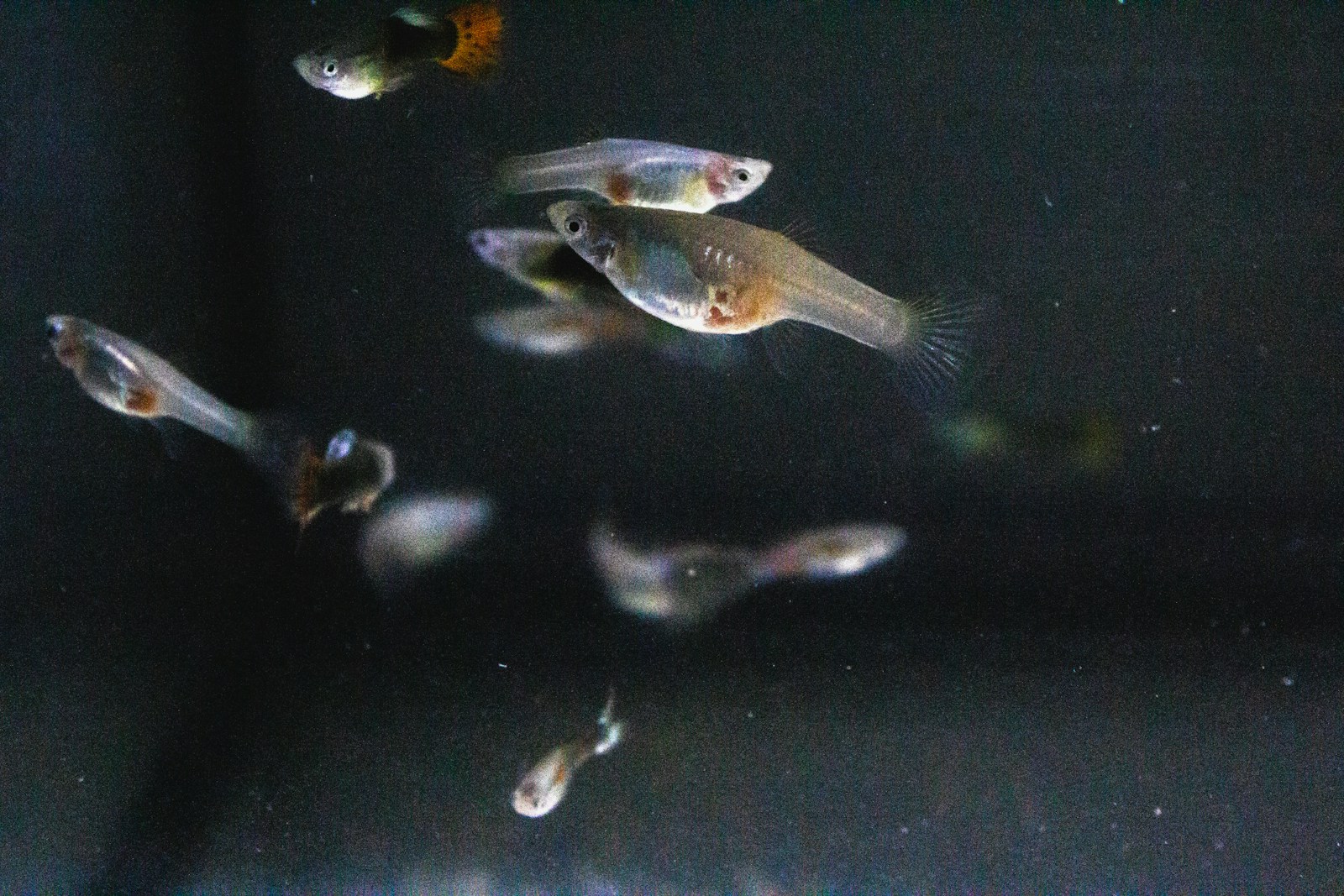
Building a Breeding Colony: Guppy and Shrimp Production Setup
Breeding your own fish and shrimp is one of the most rewarding things you can do in this hobby. It is also a discipline. The difference between a pile of mediocre fry and a real colony comes down to a few choices made early: which strain you start with, how you set up the tanks, and whether you are willing to cull. This guide is how we do it in the CSRA (Central Savannah River Area).
Why Breed Your Own
The shop-bought guppy you bring home today is usually three or four generations removed from any genuine selection. Big distributors prioritize volume over color or finnage, and the result is fish that look great in the dealer tank and produce dull, weak fry. Breeding your own gives you control over the genetics, the food, and the conditions, and within a year you can have a line that is healthier and more colorful than anything you can buy.
It also makes economic sense. A solid breeding tank produces enough surplus to sell to local hobbyists, fund your equipment, and provide a steady source of fresh stock for your own tanks. None of that happens by accident. It happens because you treat the colony like a production system.
Choosing a Strain
Pick one strain. Resist the urge to buy four pretty guppies of different colors and put them together. What you will get is mutt fry that look worse than either parent, and within two generations your line will be unrecognizable. This is the single most common mistake new breeders make.
A real strain has a defined phenotype, dragon scales, half black, snakeskin, moscow blue, and it has been line-bred for many generations to reliably produce that phenotype. Start with the best examples of a strain you can find, and stick with it. Our guppy stock is organized by strain for exactly this reason.
Line-breeding versus inbreeding
Line-breeding is structured inbreeding with selection. Brother to sister, father to daughter, with culling at every generation to remove weak or off-color fish. Done well, line-breeding concentrates the traits you want and is how every recognized strain was developed. Done badly, it concentrates genetic defects and you end up with deformed fish.
The trick is selection pressure. If you breed 30 fry and keep all 30 to be the next generation, you are inbreeding. If you breed 30 fry and keep the 6 best to be the next generation, you are line-breeding. We aim to retain no more than 20 percent of any generation. Everything else goes to a community tank, gets sold, or gets fed out.
Tank Setup for Production
Production tanks are not display tanks. They are designed for one job: produce healthy fry efficiently. That changes how we build them.
- Bare bottom. Easier to clean, easier to count fry, easier to spot dead fish. You can siphon the bottom in 30 seconds.
- Sponge filter rather than hang-on-back. Air-driven, gentle current that does not suck in fry, and they are dirt cheap to run.
- 10 to 20 gallon size. Big enough to be stable, small enough that you can run a rack of them.
- One floating plant species and one rooting moss. Hornwort or azolla on top, java moss across the back wall. Plants do not need to be pretty; they need to be functional cover for fry.
- A heater on a thermostat, even in summer in the south. Stability matters.
- A simple LED light on a timer, 10 hours on, 14 hours off.
A breeding rack of six tanks like this fits on a basic metal shelving unit, runs off one large air pump with a manifold, and produces enough guppies to keep three or four display tanks stocked plus a surplus to sell.
Sex Ratio
For guppies, run one male to two or three females per tank. The male will harass the females constantly, and a single female being chased by a single male will be stressed, develop ragged fins, and produce smaller broods. Spreading the male's attention across multiple females is better for everyone.
For shrimp, sex ratio is not something you control. You buy a colony of 10 to 20, let them sort themselves out, and the population balances naturally. A healthy neocaridina colony self-regulates to roughly 60 percent female.
Fry Survival
The first 72 hours of a guppy fry's life determine whether it makes it. After that, survival rates climb fast. The threats during those three days are the adult fish in the tank (including the mother, who will eat her own young without sentiment), water current, and starvation.
Separation tanks
The cleanest production method is to use a dedicated fry tank. When a female is visibly close to dropping, move her to a 5 or 10 gallon tank with thick plant cover. Once she drops, move her back to the main tank. The fry stay safe, grow undisturbed, and you can feed them on a separate schedule.
A breeding box that hangs inside the main tank is an alternative for keepers without rack space. We do not love them because the female is stressed in such a small space, but they work for casual breeders.
Plant cover
If you want a low-effort approach, dense plant cover does the job. A breeding tank with a four-inch deep mat of java moss on the bottom and a thick raft of azolla mosquito fern on top will save 30 to 50 percent of the fry without any active intervention. The moss gives them somewhere to retreat and grazing biofilm, and the azolla shades the surface and lets them rise without being seen.
Feeding fry
Newborn guppies can eat crushed flake on day one, but baby brine shrimp will get you twice the growth rate and dramatically better color development. Hatch BBS in a dollar store soda bottle, harvest twice a day, feed by pipette directly into the moss mat. Newborn fry should look like little pink-bellied torpedoes within a week.
Culling
This is the part that bothers new breeders, and it is what separates a strain from a mess. Culling means selectively removing fish that do not meet your standards from the breeding population. Sometimes that means selling them as community-tank stock. Sometimes it means feeding them out to a bigger fish.
Be ruthless or do not bother. A guppy line that is not culled drifts toward the mean in two generations and toward wild-type in five. You are fighting against entropy, and the only tool you have is selection. We cull on three traits at every generation:
- Color. Off-color or partially patterned fish go to the community tank.
- Form. Bent spines, deformed fins, runts. These do not breed forward.
- Vigor. Slow growers, repeated sickness. Not breeder stock.
Aim to keep 5 to 10 of the best fish from each generation, with a target of 3 to 5 going into the breeding tank and the rest as backup. Everything else is surplus.
Outdoor Tubs (CSRA-Style)
The CSRA sits in USDA zone 8a, which gives us roughly seven months a year when outdoor tubs work for guppies. We use 40 to 100 gallon stock tanks, the black plastic kind you buy at any farm supply store, set up in partial shade. The sun does the work that an indoor breeder pays a power bill for.
Setup is simple: tub, a few inches of pond soil capped with sand, a heavy stocking of hornwort and azolla, and after a four-week mature-in period, the fish go in. No filter, no heater, no light. The plants do the filtration, the sun grows live food (mosquito larvae, daphnia, copepods), and the natural day-night cycle conditions the fish.
Seasonal protocol
- April to October: guppies live outside. Daily check, occasional supplemental feed during peak summer. Production is roughly triple what we get indoors.
- November: empty the tubs into indoor tanks before night temperatures drop below 60. We start watching weather around Halloween.
- December to March: indoor rack only, reduced production, focus on selective pairings and grow-out of fall fry.
- Late March: set up tubs for the season. Plants in first, ammonia source to start the cycle, fish four weeks later.
If you are north of zone 7, your season is shorter and the math changes. The principle still applies: outdoor sun-grown fish are stronger than indoor-raised fish, and even three months a season in tubs will improve a line.
Selling Surplus
A productive guppy rack generates 50 to 200 surplus fish a month. There are several ways to move them:
- Local fish stores will sometimes buy or trade. Expect 25 to 50 percent of retail in store credit. Build a relationship.
- Local hobbyist groups and Facebook groups are where you get retail prices. Pickup only.
- Online sales require an investment in shipping infrastructure (heat packs, insulated boxes, breather bags, a postal account) but open national reach.
- Auctions at local aquarium clubs are an easy first sales channel and a great way to meet other breeders.
Price what your time is worth, not what the cheapest online seller charges. A pair of well-bred dragon guppies is worth twenty dollars, not five.
Color Genetics Crash Course
Most guppy color traits are sex-linked or autosomal, and a good breeder learns to read them after a few generations. The full chart is beyond this guide, but a few principles are universally useful.
- Body color genes are often Y-linked in guppies. Traits like snakeskin, gold body, and bronze are usually inherited father to son and do not appear in females the same way.
- Fin shape genes are autosomal and follow normal Mendelian inheritance. Both parents contribute equally.
- Albino is recessive. Two carrier parents are needed to produce albino fry. Useful for identifying carriers.
- Dragon scales (metal scaling) are dominant in most lines. One parent passes it to half the fry.
For neocaridina, all color morphs are the same species, and crossing two colors produces wild-type browns within one or two generations. The only correct way to keep a colored shrimp colony is one strain per tank, no mixing, and constant culling of off-color individuals. The bright reds and blues you see in our shop are the result of decades of careful work, and they will not maintain themselves.